________________________________________________________________________________________________________________________
CONTRIBUTE | ADVERTISE | SHOP | COMMUNITY | CAST | REVIEWS | CONTACT
2015-12-15: Hi! You're probably here because you did a Google search for 'plus sized horseback riders' or you saw my content quoted elsewhere. There are a couple of things I'd like you to know.

I am still here! But I am living away from my horses and not riding often. I could tell you a lie and say that I am, but I have always endeavored to give you the truth here. As a result, I'm not feeling terribly motivated to write blog posts and I feel out of touch with the community.

I'd love for you to stay a while and look back through the archives. Visit the links listed below. We still have an active forum community and I post on the Facebook page from time to time.

I have tentative plans to try to get more involved in the horse world in 2016, and I will absolutely share whatever that adventure becomes with you, so keep checking back!
Showing posts with label reviews. Show all posts

Friday, October 18, 2013

Product Review: Higher Standards Leather Care Products

Check out Higher Standards Farm's ETSY SHOP and use coupon code EASYKEEPER to get 20% off your order until Monday, October 21st!

So... here's the thing. I really, really hate cleaning tack.

Okay, maybe I'm lazy. Maybe I enjoy hands on downtime with my horse more than I enjoy sudsing up a collection of tack that is largely strap goods. I don't know what it is. I just know that it is not something that I generally enjoy and is, therefore, something that I generally don't do.

I think that could change.

Enter Higher Standards Leather Care products:


Cute packaging, huh?

Libby from HS sent me an 8oz tub of Fox's Vanilla Lavender leather soap ($14.95 USD) and an 8oz tub of Handmade Leather Balm ($18.95 USD), which are available through the Higher Standards Leather Care Etsy Shop along with a couple of other mouthwatering scents of soap, including a limited edition Starla's Sugar & Spice scent that sounds like it is right up my alley.


When I opened them up, I realized one of the biggest reasons I am not much of a tack cleaner. Tiny tack sponges. I never have them, when I do get them, I can't seem to keep track of them. Huzzah, the leather soap has a tiny tack sponge with it, and it fits right in the tub, so you don't have to worry about keeping track of it, it just nestles right in the tub, cutelike. And did I mention that it SMELLS AMAZING? Seriously, I think that I have solved my tack cleaning boredom thing JUST by adding a good scent to the soap.

Directions are clear and concise and were in both the packaging that the product was sent to me in as well as on the product itself (bonus, another less thing to lose!).

Okay, now I am going to install a warning. If you are someone who loves tack, and loves clean tack, the picture I am about to show you might change your opinion about me forever. So if you want to keep liking me, maybe you shouldn't keep reading.

My saddle is synthetic so wouldn't benefit from this stuff as much, and I have two back to back group trail rides over the next couple of weekends during which I would like Bronwyn and I not to look like we just crawled on our bellies through the mud, so I thought it would be a good idea to clean my bridle as a tester.

This is my bridle:


It has never been cleaned or conditioned. When I bought it, oh... five years or so ago?, it was a cheapish new bridle and the girl at the shop who sold it to me said something along the lines of 'if you condition it up and take good care of it, there is little difference between it and an expensive one, especially for the type of stuff you do'. I had good intentions, I really did. But I never took it apart and cleaned it. It has had a wipe down a time or two, but never a legit, open all the buckles, take all the parts apart cleaning. Yes, I am probably a bad person.

So I took it apart. Some of the buckles were not so easy to open. Eventually, I got it into pieces, with the help of Morrie.

PS: Morrie thinks cleaning tack is boring.

Let me try to help you understand how dirty my bridle was.


Yeah, it was that dirty.

This is what it looked like after:


 Not too freaking shabby, I would say. (You can click on any of the images for a larger picture, if I recall correctly.)

The soap smelled wonderful, the balm was AWESOME. Not too thick/greasy but clearly did the job. My bridle felt buttery soft afterwards and pretty much all of the buckles/loops that came apart hard came back together like butter. I will never make this $60 bridle into a $200 bridle, but if I had a $200 bridle, I would not hesitate to use this stuff on it!

Overall, for convenience, value, presentation, quality, and pretty much anything else that you can measure by, I give this product the highest marks. I blasted the tunes while I was working and really enjoyed the product.

Website
Shop
Facebook

Thursday, September 19, 2013

Guest Blog: Review For Kanyon Ash Wide Calf Riding/Country Boot

This guest post is from Scherry Clarke, who has a pretty incredible horse story when it comes down to it. She also makes some really neat equine themed skin care products @ Aviemare Body Care.

I've been on the hunt for a pair of wide-calf boots for a while. Unwilling to settle for another pair of cheaply made, poorly fitting boots, I set up some criteria for my "Perfect" pair:

1. They had to fit well along my entire leg. This is no small requirement because I have short legs with large calf muscles. This unfortunate combo means that my calf starts getting wider lower on the leg. If a boot fits on my lower leg it usually gaps around my upper calf.

2. They must be real leather. I refuse to pay $100+ for plastic/pleather or "synthetic" boots.

3. They must be versatile. I wanted a boot that could be used for riding, hiking, general outdoors, or even dressed up with a great tunic, tights and a scarf.

4. They must not be black. I already have a good pair of high-end black equestrian-look boots that I got from widewidths.com

5. They must not cost over $400. This seems high but you get what you pay for. I don't wear junk. I have too many foot issues to do that to myself anymore. Good boots are worth saving up for.

This boot fit all of those requirements. I won't rehash the description. Rather, I will give info that the description does not tell you.

HEIGHT: Nowhere in the description do they mention how tall this boot is. I could not find it ANYWHERE on line and nobody responded to my inquiries. I do not know if the height increases incrementally with size but my boots are a size 9 UK and 15.5 inches tall.

CALF FIT: This particular model is called the Ash. It adjusts from about 17 inches to 20 inches. The 3 inch gusset runs the entire length of the boot so as your leg widens and enlarges the laces can be adjusted. The top part of the boot has a buckle for adjustment. The buckle can be unsnapped from two different positions to further customize fit. There is a small leather piece that snaps over the laces to keep them in place. Plus it looks snazzy.

COLOR: Very attractive two-tone brown. Pretty much true to my monitor.

EASE OF PUTTING ON: I was concerned about this due to high insteps but was pleasantly surprised. I only had to unlace to boot a few holes and my entire leg went right in!

SIZING: This might be your only glitch. Every chart for international sizes said something different. I wanted to pull my hair out. I wear a straight 10 in most US sizes; an 11 with some brands such as Earthies Euro sizes get trickier. In Dansko I wear a 41 which is 10.5-11 in US. In some Euro sizes I need a 42. I always check each brand's charts.

In boots I like an 11 in case my injured feet/ankles swell. So I got a size 9 UK which supposedly corresponded with an 11 US. It did NOT! The box actually states 11.5 US.

However, I put a good pair of Spenco inserts in the boots and a thick footie/sock on my foot and they fit very nicely with room to wiggle my toes. I MUST have this room because my toes go numb if they are crushed. So it worked out fine.

Because these boots come from the UK I would email the seller with ANY questions. I would also err on the side of the boot being a bit larger than too small. One size larger can usually be fixed with orthotics insoles and/or socks.

HOW THEY FEEL: I wore them for a about an hour walking around our olive grove then took my horse for a walk. They were comfortable right out of the box. The top part of the boot is sturdy yet soft and flexible enough to not bruise the daylights out of my high insteps. This was a huge relief.

DUTY/IMPORT TAXES TO US: Another slight snag. I have never ordered internationally so this was a new experience. The boots came a full week early from the date Amazon emailed me and I was asleep. I got a note on my door from UPS saying I owed $26.13 in fees. I was not informed by Amazon, UPS OR the Seller that these fees would be due at the time of delivery or how much they would be. Luckily I was able to contact UPS and the driver stopped back by before leaving town. UPS likes a check for the fees. They won't accept cash.

I have no idea how one can find out how much the Duty/Customs fees are ahead of time. I will have to research this more if I make more international orders. I could NOT find a US seller for this boot however so I had to buy from the UK.

BOTTOM LINE: A sturdy, stylish and functional boot that has multiple uses. Water resistant. Total cost of boots, shipping and duty/import fees: just over $300. Worth every penny as I feel these boots will last a long time if properly cared for.

RECOMMEND: YES!

Peace,
Avie

Note: the boots can be found to purchase HERE.

Monday, September 9, 2013

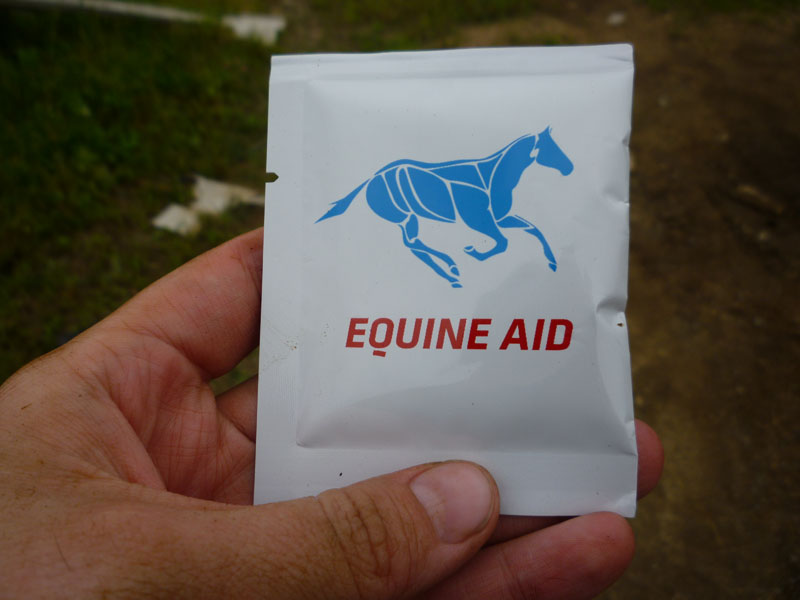
Product Review: Equine Aid

I am pretty fortunate to have at least one horse that is a good drinker. So good, in fact, that I tend to rarely actually see her drinking at home - she seems to have no qualms about water quality or flavour and is always hydrated. For those that don't have Bronwyns, meet EquineAid, a product that, per their website, has changed the old adage that you can lead a horse to water but you can't make it drink.


Make no mistakes, this is not marketed as an electrolyte (because it's not!), but as something to think of as "a horse cookie dissolved in water" - a tasty treat to encourage your horse to drink when it might not otherwise want to. There is no comprehensive ingredient list on the website but it does say this:


The ingredients in Equine Aid are all human grade--organic, non-GMO alfalfa, molasses, brown sugar, and pink Himalayan rock salt--and are consumed by horses on a regular basis without any adverse effects. 
[Post entry note: The rep I have been working with informs me that what I've listed above is the comprehensive list of ingredients. Straight, simple, wholesome!]

Soooo... since it said it was human grade ingredients, before I offered it to my horses, I did what I usually do - I tasted it. I lived! It tasted a bit like black licorice, actually.

Overall, I found the presentation of the product - both the packaging and the product itself - to be neat, clean and professional - just the way I like most things.


The instructions for use on this one were obvious - mix with a bucket of water and offer to horse. I did find it didn't dissolve into the water as quickly as I would have liked but there were no adverse affects as a result of it - kind of when you put cocoa in milk or water - maybe mix or shake it into a small amount of water prior to mixing it into the larger bucket.


(I didn't taste the water after I mixed in the supplement, but I am sure it would have tasted good!)

The next step was to get my taste testers! They had been in the barn for a couple of hours so I thought it would be a prime opportunity to offer them a drink -- this is what I ended up with:


Bronwyn, who actively ignored it.


And Rex, who was interested, but not interested enough to drink. As I did this outside, I thought perhaps it was the "you can lead a horse to water but not make it drink" thing, so offered it inside, in their stalls... which was met with similar disinterest. They weren't interested in straight water, either - so it leads me to believe that it had nothing at all to do with the EquineAid in the water, and everything to do with that they just weren't thirsty.

I did, however, offer it to Serenity, who thought it was pretty snazzy:


To be fair - the website recommends that you feed it dry on top of their feed to get them used to the taste and in their water at home so they will drink it off property as well, which makes sense. I can't say for sure if things would be different if I offered again, but I do have other samples and plan to give them a shot when I have actually taken one of my kids out and worked them - so they ought to be thirsty.

My overall verdict? If you have a horse who is a picky drinker (and we all know them), EquineAid can be ordered for $1.99/pouch or $25 for 30, which, as someone who doesn't venture off property very frequently, I find to be pretty reasonable. 

Stay tuned for part 2...

Thursday, July 25, 2013

Guest Blog: Safety Vests For The Plus Sized Rider

Writer, Vickie Tatum, is one of our "family" at the AFG&AFH forum and when she shared her experience on the forum, we knew she had to write us a blog. Enjoy her articulate, thorough approach to her experience with riding vests!

Last year, I fell off a horse and broke 4 ribs. I’ve always heard that broken ribs are painful, but until I actually experienced it, I had no idea what that meant. I don’t ever want to go through that again, so I spent some of my recovery time shopping for protective vests.

Once I decided to purchase a protective vest, the first thing to decide was whether I wanted a traditional vest or one of the new air vests. When I watched the Olympic equestrian events on TV last summer, I saw one of the air vests deploy in a fall on the cross country course. It looked pretty cool, but they are also quite expensive and somewhat controversial, with some experts suggesting that, in some circumstances, they could actually be harmful. Plus, they seem like more than I need as a recreational rider, so I crossed air vests off my list.

The next thing to decide was whether I wanted an approved vest. There are three different certification systems for protective vests. These systems set standards that must be met for things like impact and puncture resistance. In the US the certification system is ASTM, in Europe it’s EN, and in the UK it’s BETA. In addition, within each certification system, there are different levels or standards for different types of equestrian activity. The approved vs. non-approved decision is one everyone has to make for themselves.

In the end, I decided an approved vest would be nice, but if the vest that best met my needs was not approved, I wouldn’t pass on it only for that reason. I don’t ride at high speeds or jump large fences or ride lots of green horses, so, recent fall aside, I’m not really a high risk rider. Plus, the Tipperary Eventer vest, which has long been popular among eventers, isn’t certified and plenty of people will testify as to its protectiveness during a fall.

Once those decisions are made, I was still faced with what turned out to be the biggest obstacle in purchasing a protective vest: my size. When you are plus sized, some vests simply don’t come in your size. And, even when they do, your local retailer or the familiar big catalog/online retailers like SmartPak and Dover, may not carry the larger sizes. But, with the help of the internet and my mad googling skills, I was able to find several vests that are available in my size. Tipperary, Charles Owen, Rodney Powell, and Airowear all make vests in larger sizes.

When I went to the web site of the manufacturer of Tipperary vests, I found that some of their vests are available in chest sizes up to 52 inches (132 cm). I also found that the size charts on the web site show sizes much larger than those available for order. I contacted the manufacturer and was told that I could special order those larger sizes. The Competitor model can be ordered in chest sizes up to 56 inches (142 cm) and the Racer style in chest sizes up to 60 inches (152 cm).

The Charles Owen Kontact5 is available up to size XL, which fits chest sizes 38-46 inches (96-117 cm). I also found the Charles Owen jL9 in size XL at a couple of online tack shops, although most stopped at size L. However, I noticed that the size charts seemed to vary between retailers. For example, one online retailer’s size chart for the jL9 showed size L fitting up to a chest measurement of 40 inches (101 cm) while another retailer’s size chart showed it fitting up to a chest measurement of 43 inches (109 cm). So, Charles Owen vests may be something better purchased through a local tack shop where they can measure you and provide size advice.

Rodney Powell vests come in a staggering array of sizes, custom made to fit your measurements. The most common sizes are available ready made from a variety of online retailers, but if you want larger sizes you need to order a custom fit vest, which can be done through any tack shop that carries the vests or through a number of online retailers. The manufacturer’s web site provides detailed instructions on how to measure and also has some nifty features like an “interactive designer” and a size calculator.

The Airowear Women’s Outlyne vest is available off the shelf in sizes to fit chest measurements up to 49 inches (124 cm).

I now own two different protective vests. The first vest I purchased was the Airowear Outlyne. It is certified to the highest BETA level, which is Beta 3. I chose this vest because it was recommended by one of the A Fat Girl and a Fat Horse Forum members and because it is advertised as being “specifically designed to fit the female body shape.” I ordered it from an online retailer in the UK, Amira Equi. Even with the shipping, the price was competitive with US sources (cheaper than most) and it arrived amazingly quickly. I got my Mom to help me measure myself according to the instructions on the web site, ordered the size indicated, and it fit perfectly.

I love this vest. It’s soft and flexible and after you’ve had it on for a while, it molds to your body shape. I swear it fits me better every time I wear it. Once I’ve had it on for a few minutes, I forget about it. It does not interfere with my riding on the flat or over fences in an English all purpose or jumping saddle. I feel much more confident wearing it.

However, nothing is ever perfect, and that is true of my Outlyne vest, as well. While it is great for riding in my English saddle, it’s not so great when I want to go western. When I ride in my western saddle, the back of the vest often bumps against the cantle and when I lean forward or lean down, like to open a gate, I tend to bump the front of the vest against the saddle horn. Also, I live in Florida and now that the temperature is starting to rise, wearing the vest is hot. It’s not so noticeable when I’m just trail riding or riding for fun, but in a riding lesson, where I’m steadily working without much of a break, I really get hot.

My second protective vest purchase was an impulse buy right after I had one of those hot riding lessons. I spotted a Tipperary Ride-Lite vest in my size and on sale. The Ride-Lite is from the opposite end of the spectrum of protective vests. It is not certified, is much lighter weight than the Outlyne, and is marketed to the beginner or recreational rider. It’s shorter so it doesn’t offer as much tailbone protection as the Outlyne, but it doesn’t bump against the cantle of my western saddle nearly as much, either. It also seems, if not a lot cooler, at least somewhat less hot than the Outlyne vest, although the final verdict won’t be in until we hit mid-July or August.

How do I feel about the Ride-Lite? Well, to borrow an already overused phrase, it is what it is. On the one hand, it doesn’t mold to my shape like the Outlyne does, but on the other hand, it’s so much lighter that its overall stiffness isn’t really an issue with respect to fit and comfort. Indeed, it fits me well and is comfortable to wear. If I hadn’t already been wearing the Outlyne, I would probably feel better about the level of protectiveness offered by the Ride-Lite. I feel confident that the Ride-Lite is likely to provide some degree of increased protection in a fall, but it certainly doesn’t inspire the level of confidence I feel when wearing my Outlyne. I can’t criticize the Ride-Lite on that account, though, since it wasn’t designed to provide the same level of protectiveness.

Overall, I’m sold on the idea of wearing a protective vest for riding. I joke that I wish I had an exciting story to tell about how I broke my ribs. You know, one that starts with something like, “My horse and I were galloping toward a 6 foot wall…” But, the truth is, I wasn’t doing anything but trotting along in a familiar field on a well-broke horse that I’ve ridden dozens of times. I came off over her shoulder in a spook-and-spin, in the same kind of fall I’ve had many times over the course of my riding life. So, I’ve put my vest in the same category as my helmet: wear it every time. I figure that if I got used to wearing a helmet, I can get used to wearing a protective vest, too.

Vicki wearing her Airowear Outlyne vest


UPDATE: Several weeks after I finished writing this blog post, I had another fall. I was wearing my Outlyne vest and I am happy to report that it performed perfectly. On the part of my body covered by my vest I had no broken bones, no bruises, not even a sore spot. Now, if someone would just start making some protective pants…